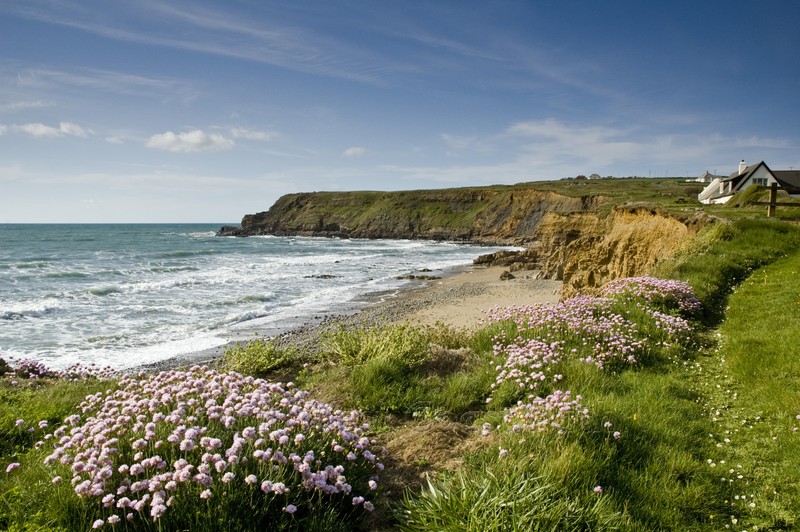
This Wednesday, the 18th, Shirley Battle will be leading a very special walk around Widemouth Bay, Bude and Bude Canal.
The drive to and from the walk is about 1 1/2 hours each way, and the walk itself will take 3 1/2 hours (approximately 5 miles), so be prepared to be out most of the day.
If you’d like to go, please contact Shirley on 741324 or by email on grumpi@tiscali.co.uk. Car sharing will be vital for this walk, so she’ll need a list of people in order to organise lifts.
Shirley will be away in July so we’re looking for someone who’d like to volunteer to lead July’s walk. If you’d like to, please let Shirley know!
Colleen Lewis, Val Puddiphatt and Kathy Merrett enjoy their work
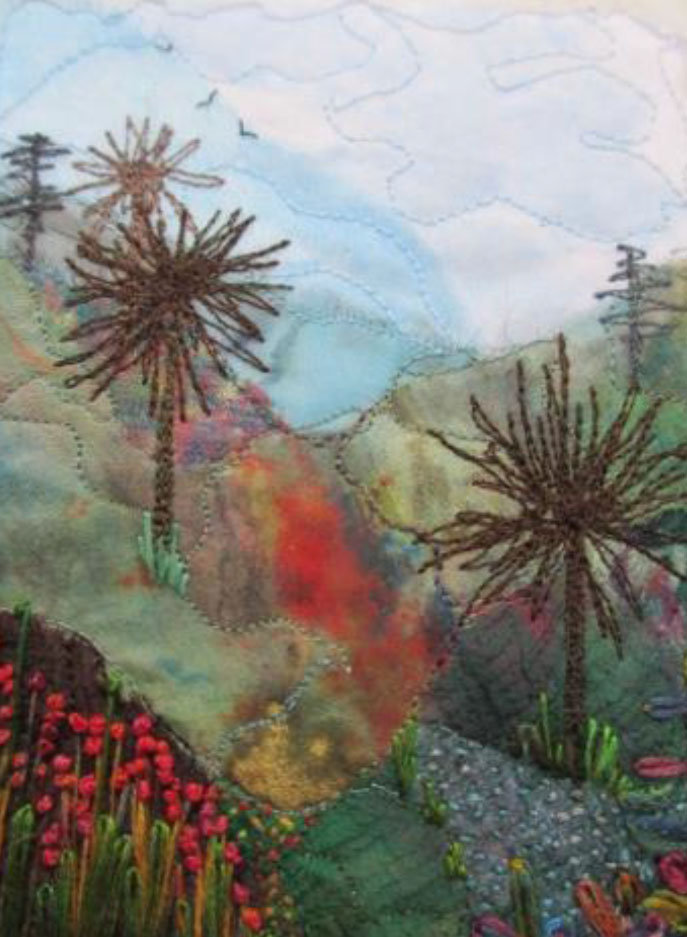
On Friday, some of us learned the basics of fabric fusion with our own very talented Rosemary Gries.
We worked at tables with views into Rosemary’s lovely garden and were supervised by handsome Charlie-the-cat.
Wielding dangerously hot soldering irons, we worked with gossamer-fine strips of organza of every colour of the rainbow. We let our imaginations run free and created our own pictures and designs to take home with us.
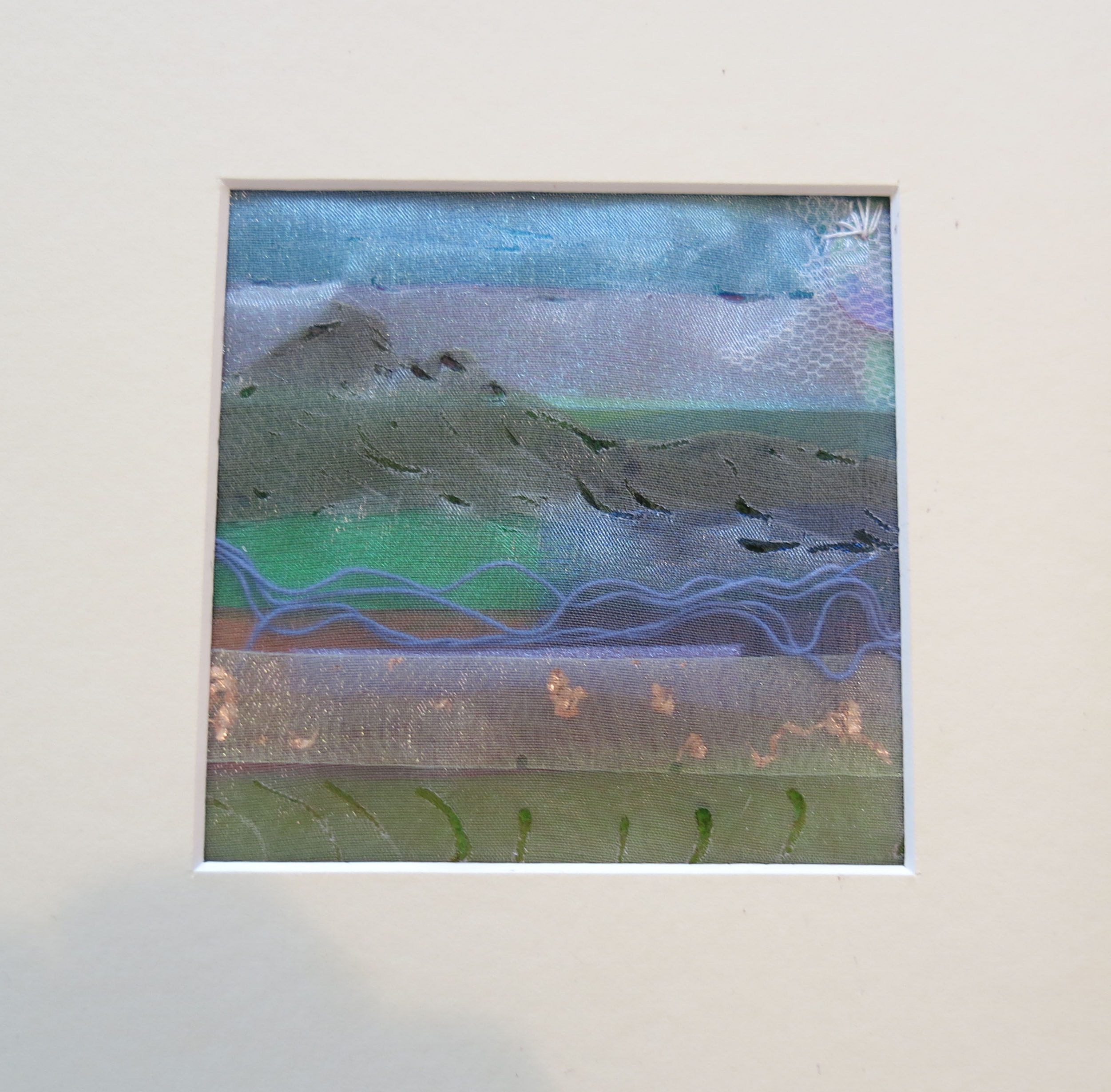
Laraine Turner’s piece of fused fabric
After lunch in the sunny garden, some remained to embellish their fused pieces further, with embroidery, ribbon and sequins.
Thank you so much to Rosemary for her patient tutelage and to Lis Davies for organising the day and for bringing along her delicious chocolate cake!
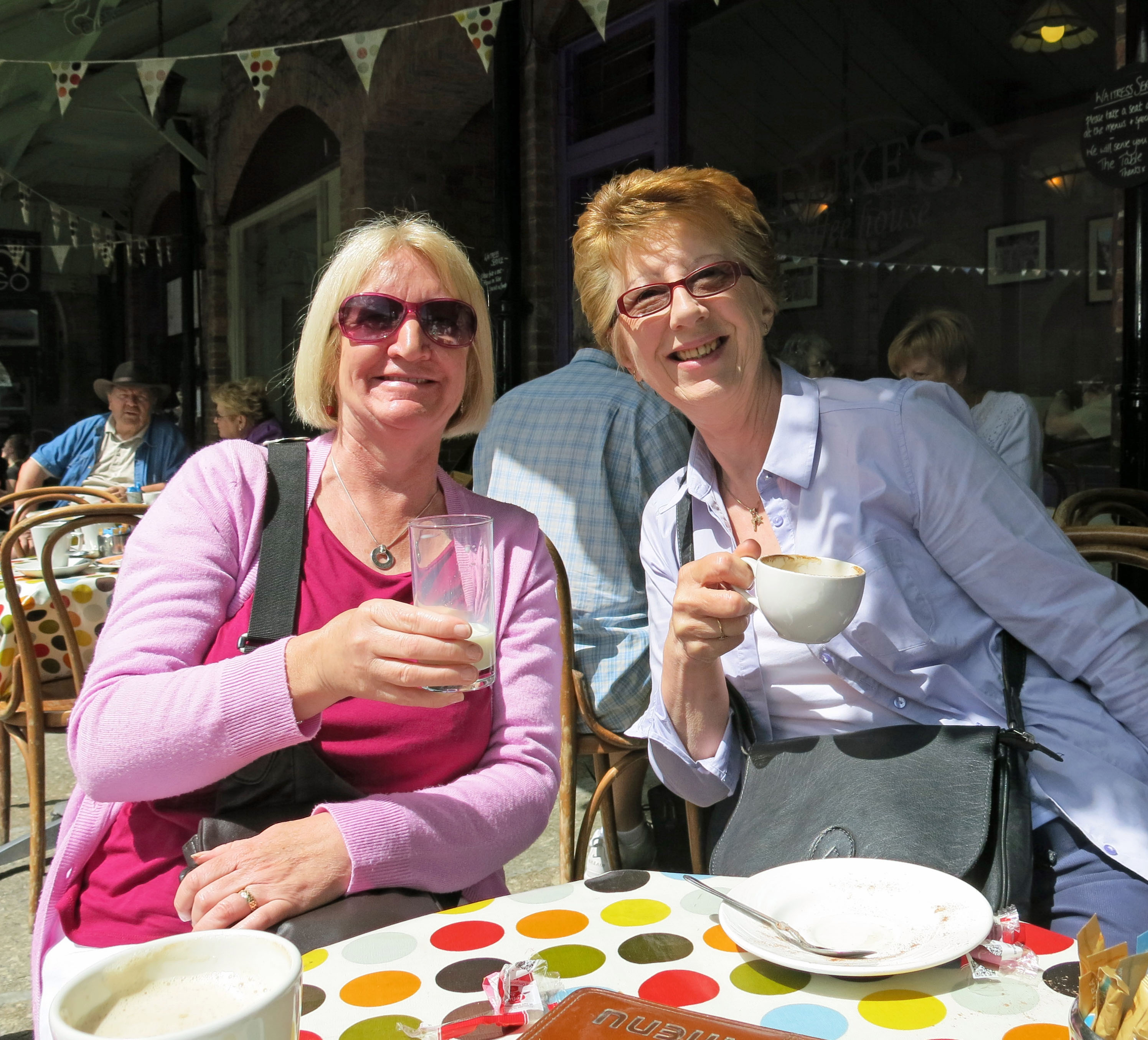
Sue Badcock and Wendy Allen enjoy a little coffee break in Tavistock.
On Thursday, some of us went on a lovely CFWI outing to Tavistock and The Garden House at Buckland Monachorum.
Our coach arrived in Tavistock in the morning and we had time for coffee, some window shopping, a look around St Eustachius Church and an al fresco lunch.
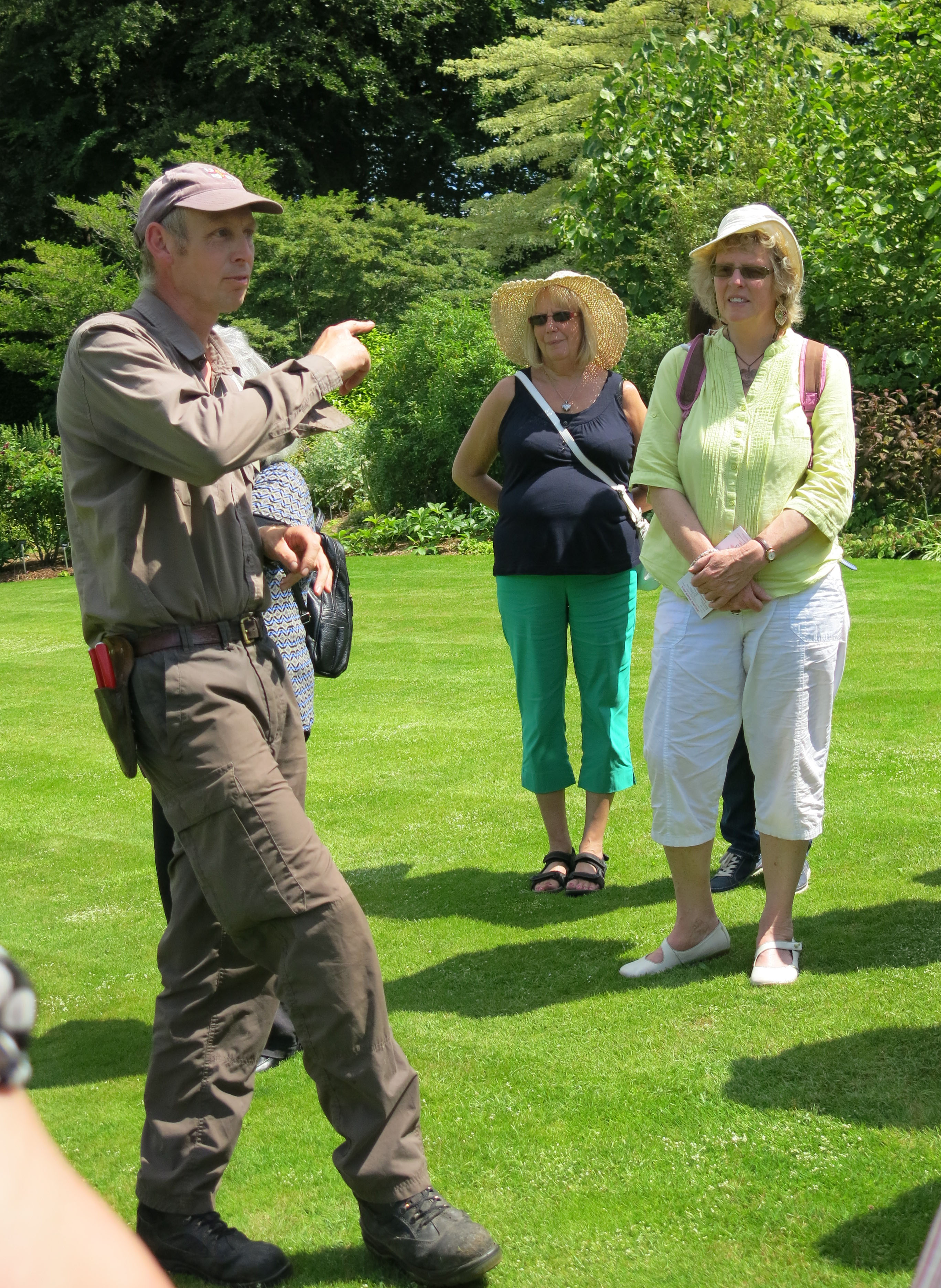
We then travelled on to Buckland Monachorum for a tour of the gardens at The Garden House. Head gardener Nick walked us around the whole garden, telling us about its history, his work and future plans for the garden.
Nick, the head gardener at the Garden House
It was a full day but a very good one! And we couldn’t have asked for nicer weather!
If you’d like to see more photos of our day out, click here.
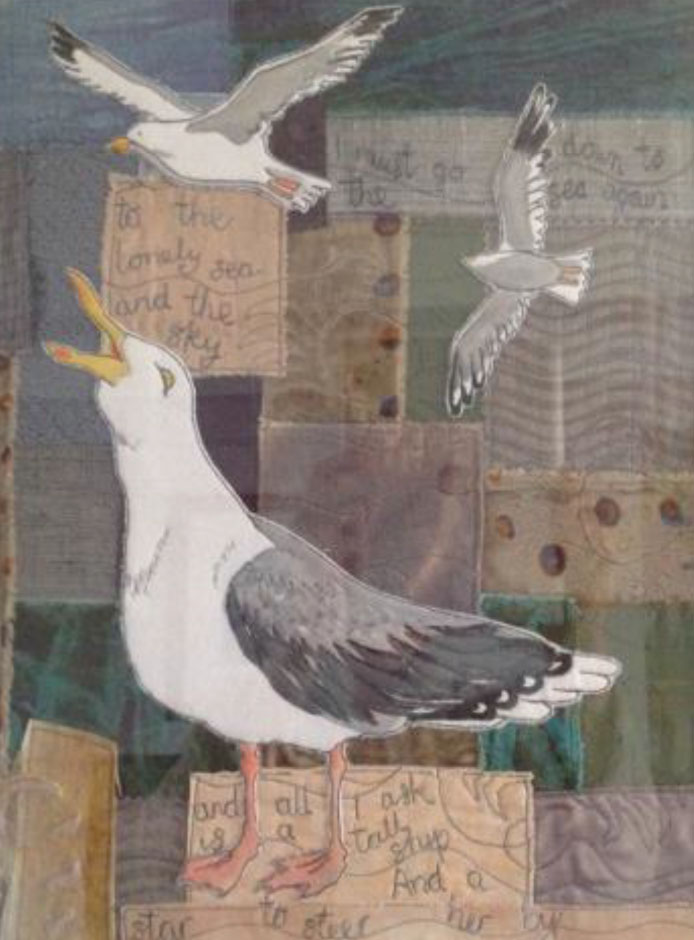
Some of you might like to pop in to Shire Hall in Bodmin next week to have a look at ‘Forty Years On’, a stunning new exhibition by the Cornwall branch of the Embroiderers’ Guild of their work over the last 40 years.
‘Forty Years On’ has been described as a rainbow of delights. What developments there have been over this 40-year period! Gone are the days of decorating useful objects with ready-made threads and designs. Today’s embroiderers can still do that – but so much more. They make their own materials: luxurious background papers of leaves and natural fibres; and pure silk paper and threads, dyed, mixed and twisted to create new textures and colours. In addition to hand stitching they machine, glue, layer and pierce, and use wood, shells, leaves and paint.
Embroidery has become textile art and several members are artists in their own right, bringing new ideas to their work. Like artists everywhere, our members draw constant inspiration from each other and their environment.
The exhibition will be held from Monday 16th June through Friday 27th June (but not on Sunday), from 10am until 5pm. Admission is free and there will also be sales of items and secondhand books.
For further information, email gilliantrewhella@hotmail.co.uk.
Just a very quick message to let you all know that the organ donation resolution passed at last week’s AGM in Leeds with a resounding 98% majority.
You can read all about it on the NFWI blog (‘Behind the Door of 104’) here.
As you probably know, our link delegate for the AGM this year was Sheena Thomasson from Germoe and District WI. Sheena will be attending our meeting on Monday evening and presenting her report on the AGM to us then.
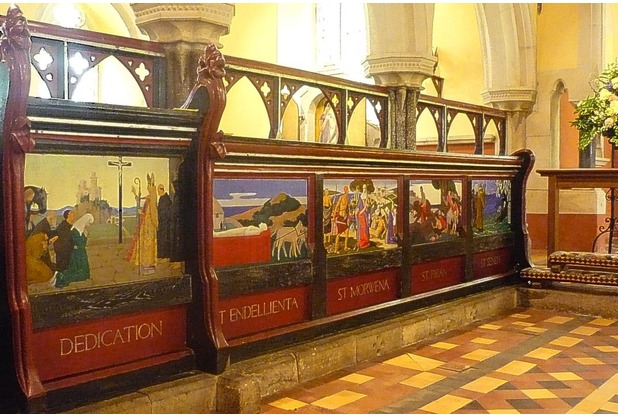
Later this month, we have an outing to the lovely St Hilary Church and the adjacent Heritage Centre. For anyone who hasn’t been to the church before, you’ll be amazed at the gorgeous 1920s Newlyn School paintings there.
The church was transformed during Rev. Walke’s time at St Hilary, due in part to his wife Annie who was an artist in Newlyn and whose friends were commissioned to help decorate the church. It’s an extraordinary story!
It occurred to us that, after our visit, you might be interested in hearing more about Bernard Walke. On Thursday 17 July, there will be a talk about him as part of this year’s Penzance LitFest! Speaker Lesley Michell was instrumental in setting up the St Hilary Heritage Centre and will be talking about Walke’s fascinating life.
If you’d like to come along on the St Hilary Church visit scheduled for 20 June, please contact Kathy Merrett on 757107 or by email on kathleenmerrett@btinternet.com.
To book tickets for the Penzance LitFest, click here.
A little addendum to our Royal Cornwall Show blog entry from a few days ago!
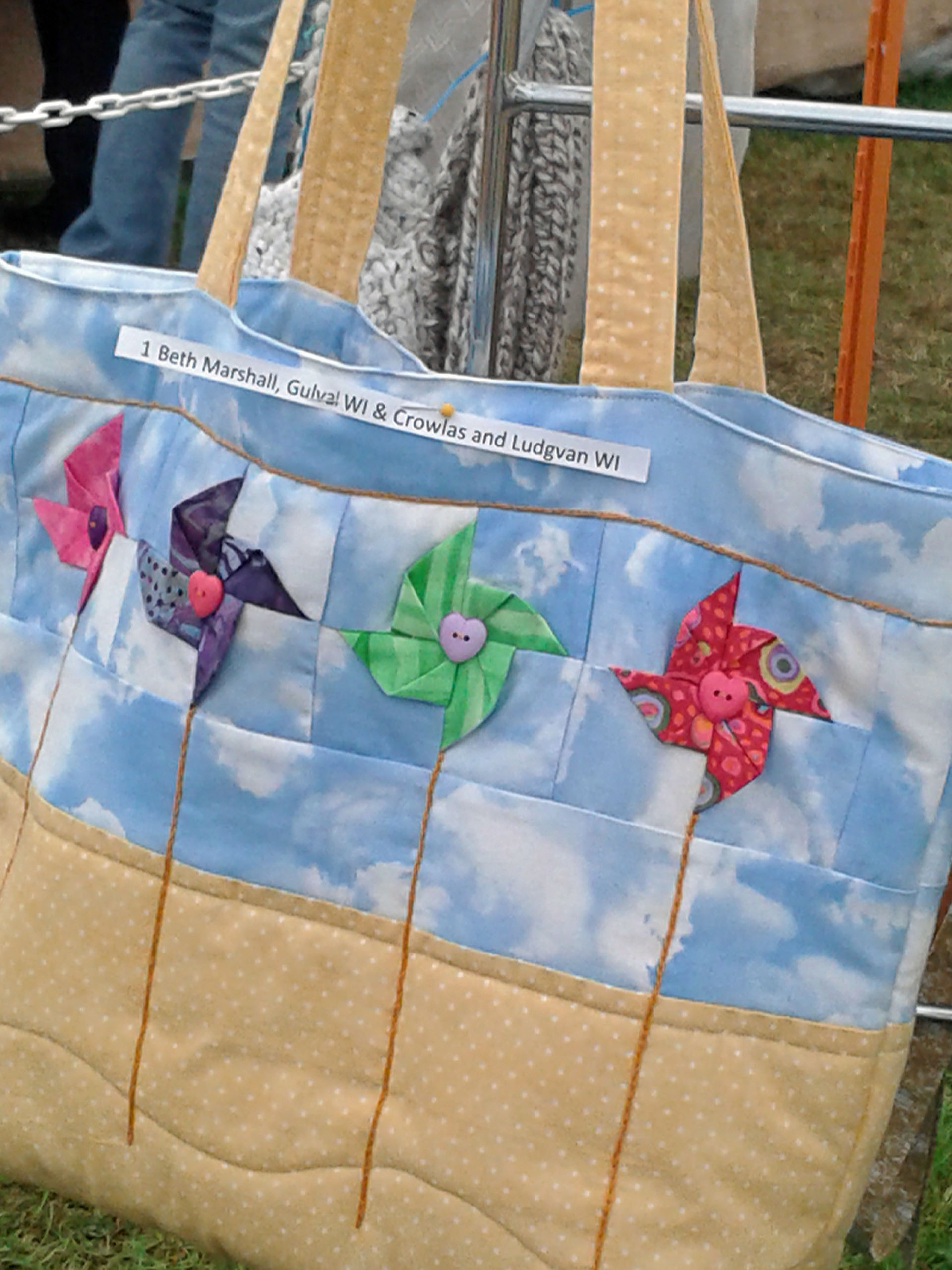
Beth Marshall, one of our talented Crowlas & Ludgvan crafters, entered the Barbara Reed Trophy competition at the Show. She didn’t win a prize, but it was her very first time entering and I think the bag she made is great!
The theme this year was ‘a bag suitable to take on a parish walk’. We’d be proud to take that beautiful bag on our walk!
Well done, Beth!
We know Crowlas & Ludgvan WI is full of creativity and talent! Next year if you don’t fancy joining the group and putting together the Cup competition entry, why not enter the Barbara Reed Trophy competition? We’ll let you know next year’s theme as soon as possible!
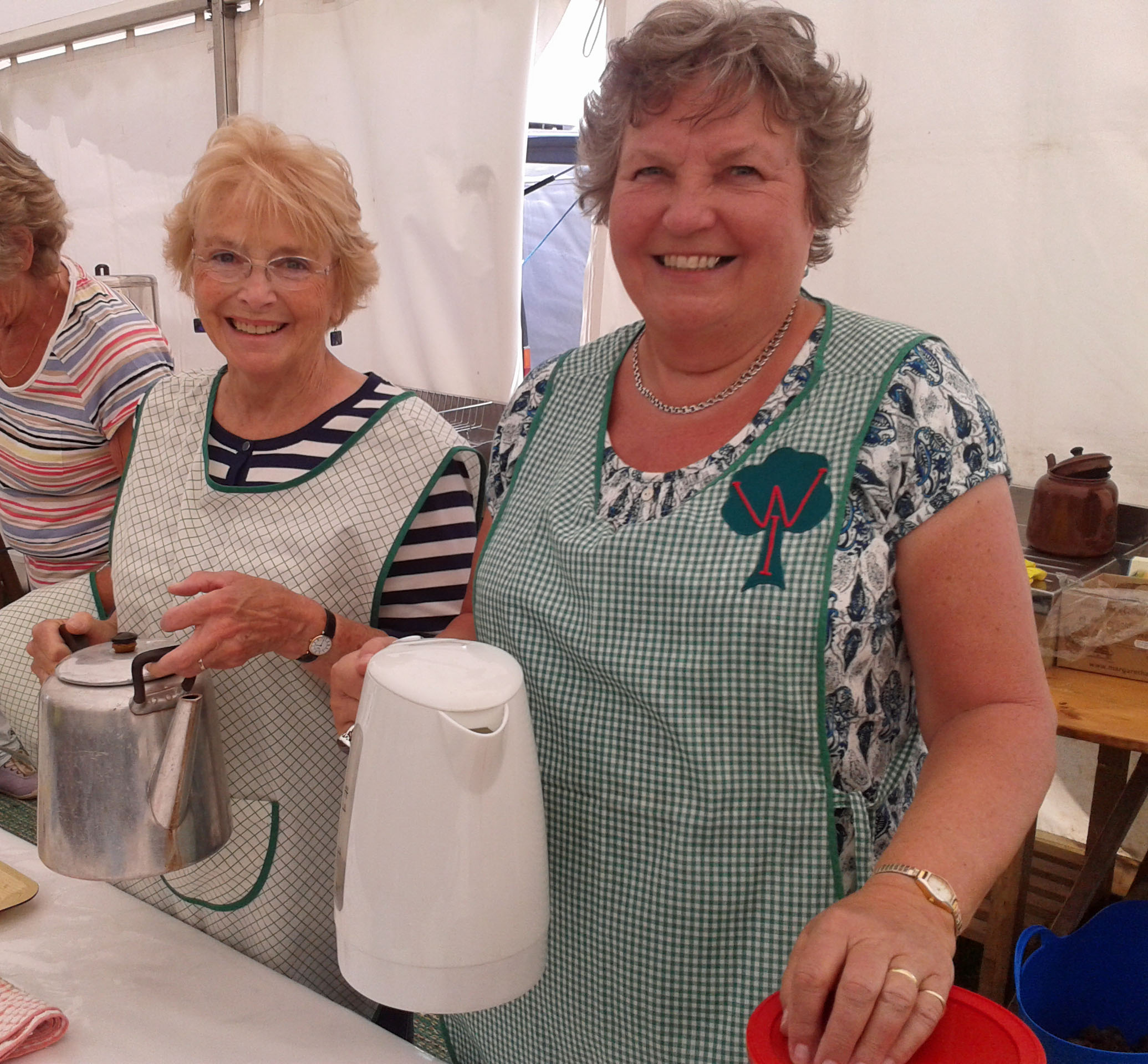
And, from Saturday, here are Colleen Lewis and Gill Gowland looking very happy as they help with teas in the WI Marquee.
For those of you who didn’t know, a small team of Crowlas & Ludgvan WI members has been hard at work for the past month or so working on our entry for the Royal Cornwall competition.
The theme this year was ‘A Parish Walk’, and Wendy Allen, Shirley Battle, Di Curnow, Helen Kestle, Val Puddiphatt and Jane Twose made up our team.
The four elements of the exhibit were cookery (an item of Cornish fayre to sustain you on your walk), a craft item for your walk, a photograph of a gate along your walk and a floral arrangement to depict a cottage garden.
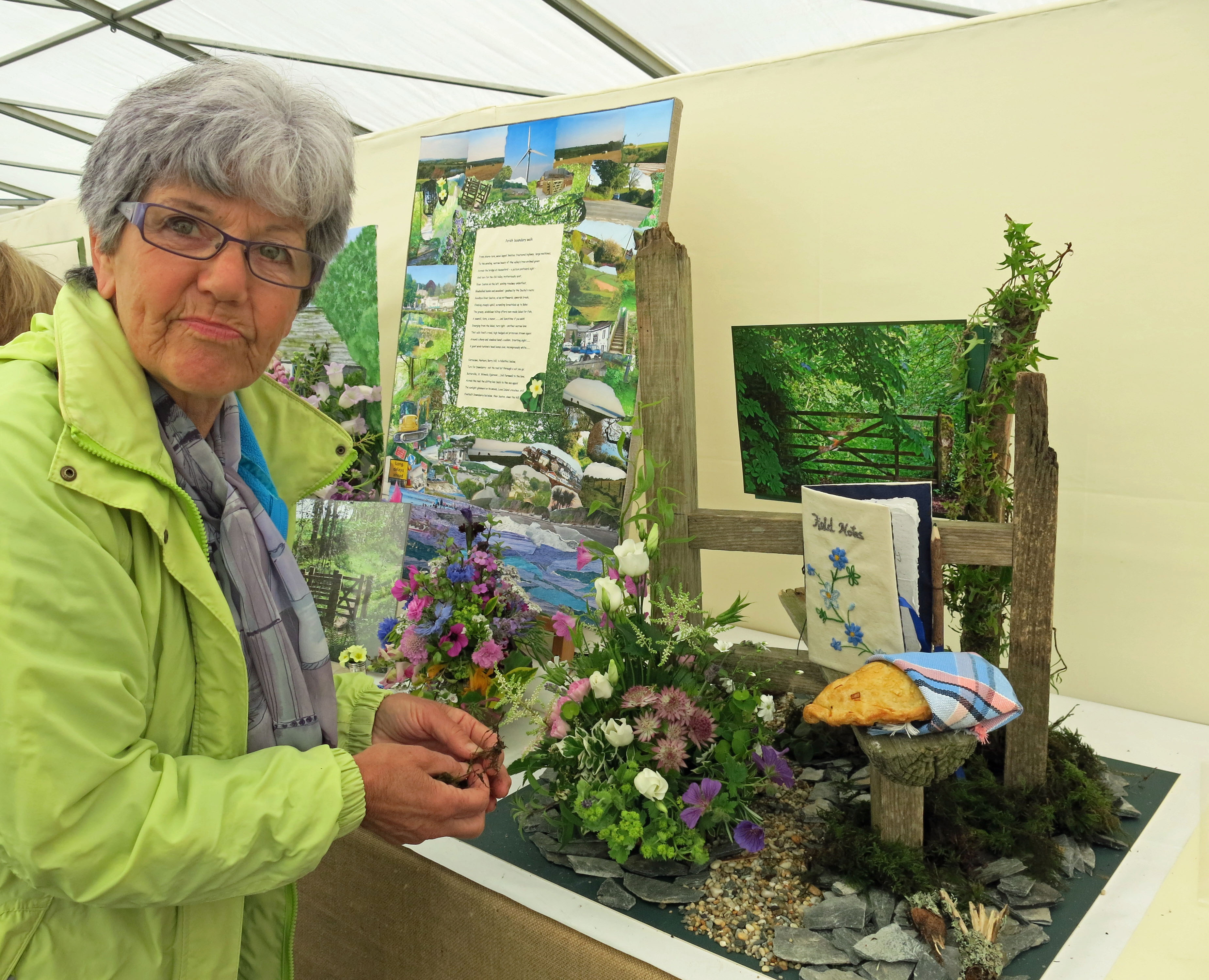
Shirley looks a bit concerned as she stages our entry on the Wednesday before the Show opens.
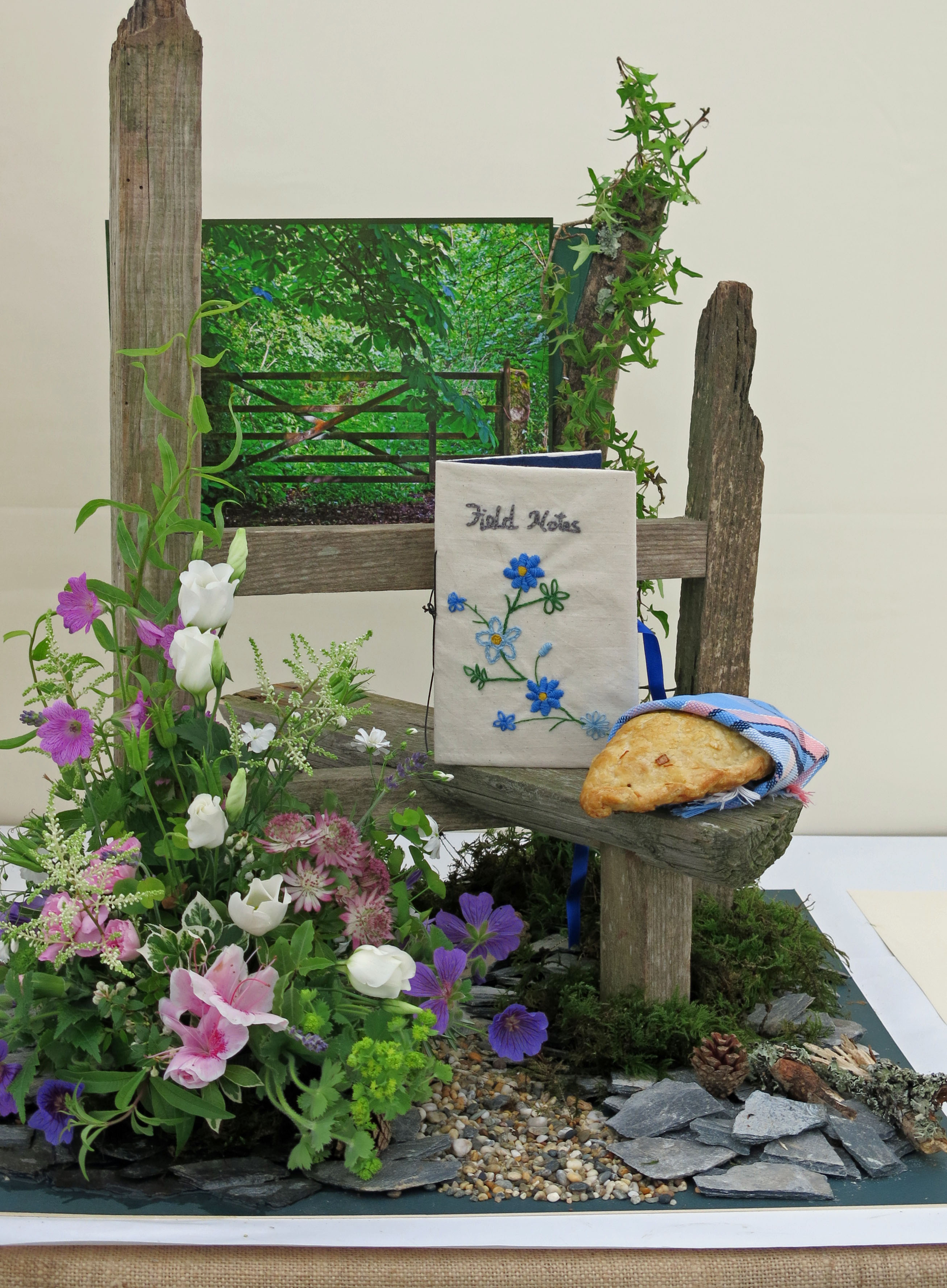
Jane made us a fabulous Cornish seafood pasty, with a delicious filling of crab, monkfish, prawns and saffron. Wendy took a beautiful photo of a gate. Shirley came through as always with a lovely floral display. And, finally, our craft item was a little ‘Field Notes’ notebook for a walker to jot down details about plants he or she found on the walk – Helen and Jane made handmade paper (with instruction from Gail Allen), Di embroidered a stunning flowery cover for the notebook and Val filled it with spectacular watercolours of flowers and plants.
The best part of our exhibit (we thought) was our staging. At the centre of the exhibit was a mini stile on which we placed the pasty and the notebook. The base of the display was covered with broken bits of slate with scattered moss, bark and pinecones. It all looked so beautiful!
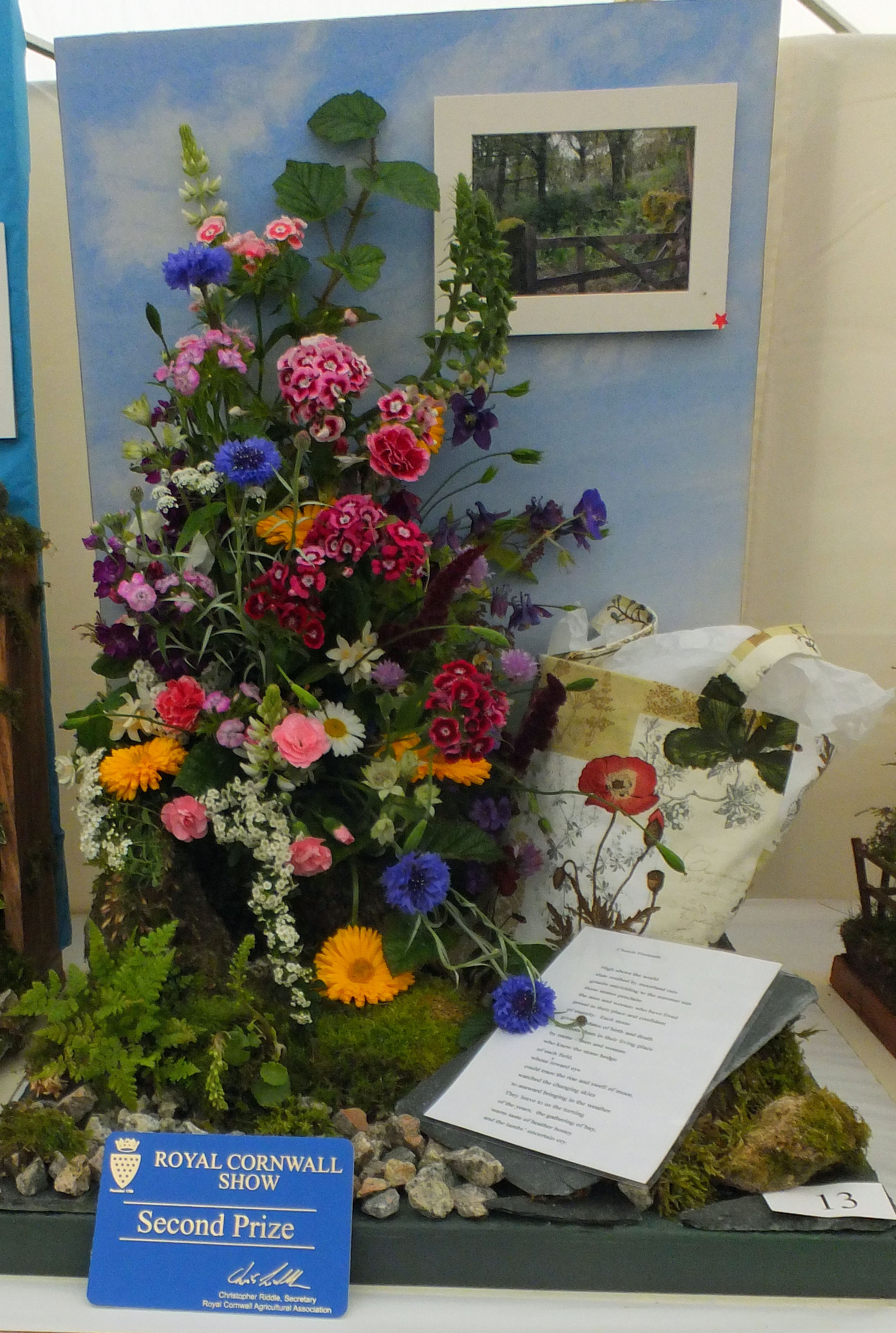
St Breward WI came second.
In the end, we came fifth out of 29 entries which we were very pleased with. It’s only our second time entering and we’re still learning the ropes! Our highest scores came for Interpretation, for which we were given 19/20 (“A lovely interesting idea well displayed”); Staging, for which we received 18/20 (“A very attractive entry. The stile is the right proportion.”); and Shirley’s flower arrangement which also received 18/20 (“Creative and imaginative. Delicate colour harmony. Really charming.”)
There were some really wonderful entries this year so we were all delighted to have done as well as we did.
A ginormous thank you goes out to the entire team, as well as Gail Allen, Ted Battle and the incredible John Curnow who built our stile and without whom we’d have been sunk!
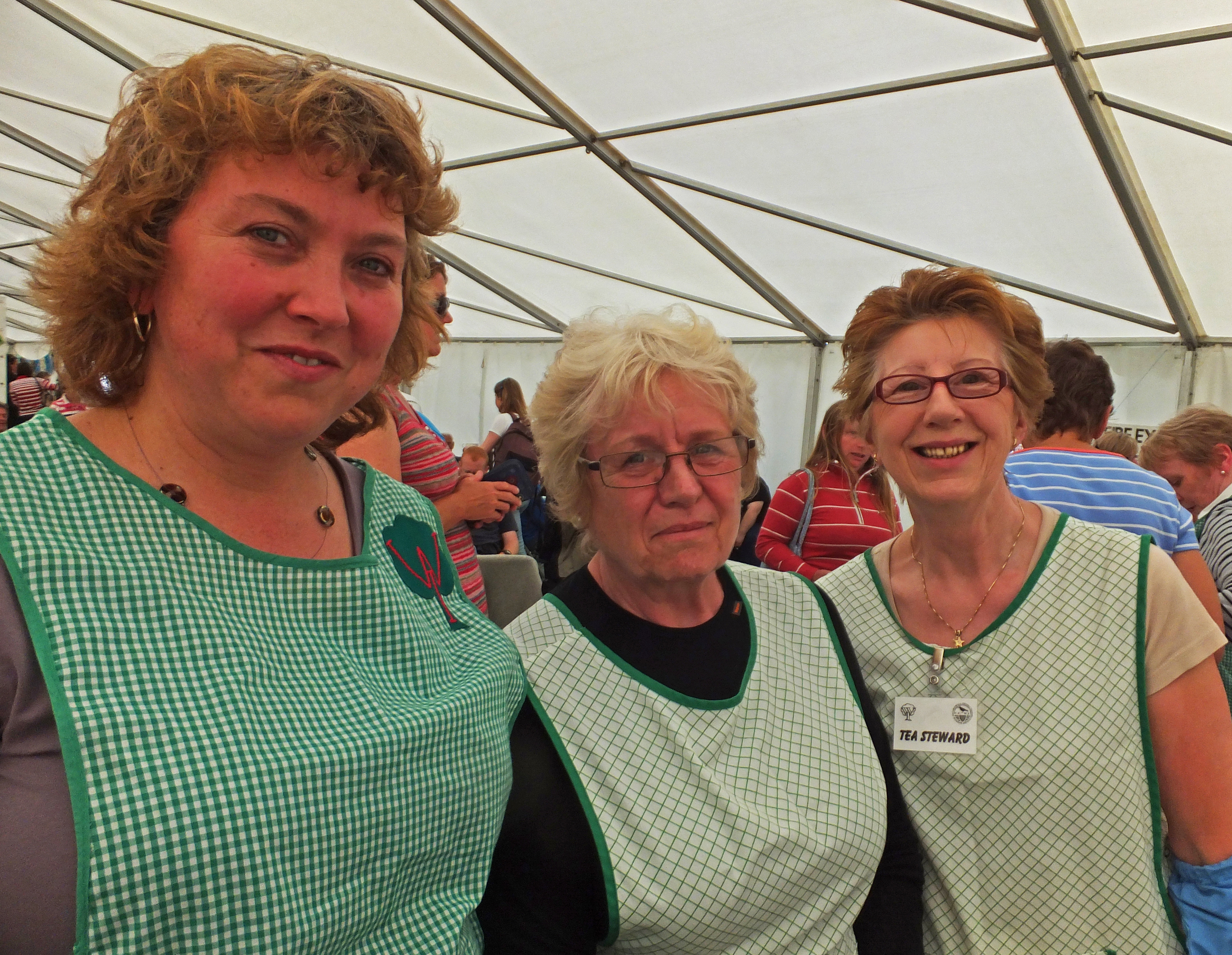
And finally, a photo of some of our tireless members after finishing their stint serving tea in the WI marquee at the Show on Friday:
Julie Blewett, Val Puddiphatt and Wendy Allen
Gill Gowland and Colleen Lewis also volunteered and served teas on Saturday.
Thank you to everyone who helped both with the competition entry and with the teas!
 This Wednesday, the 18th, Shirley Battle will be leading a very special walk around Widemouth Bay, Bude and Bude Canal.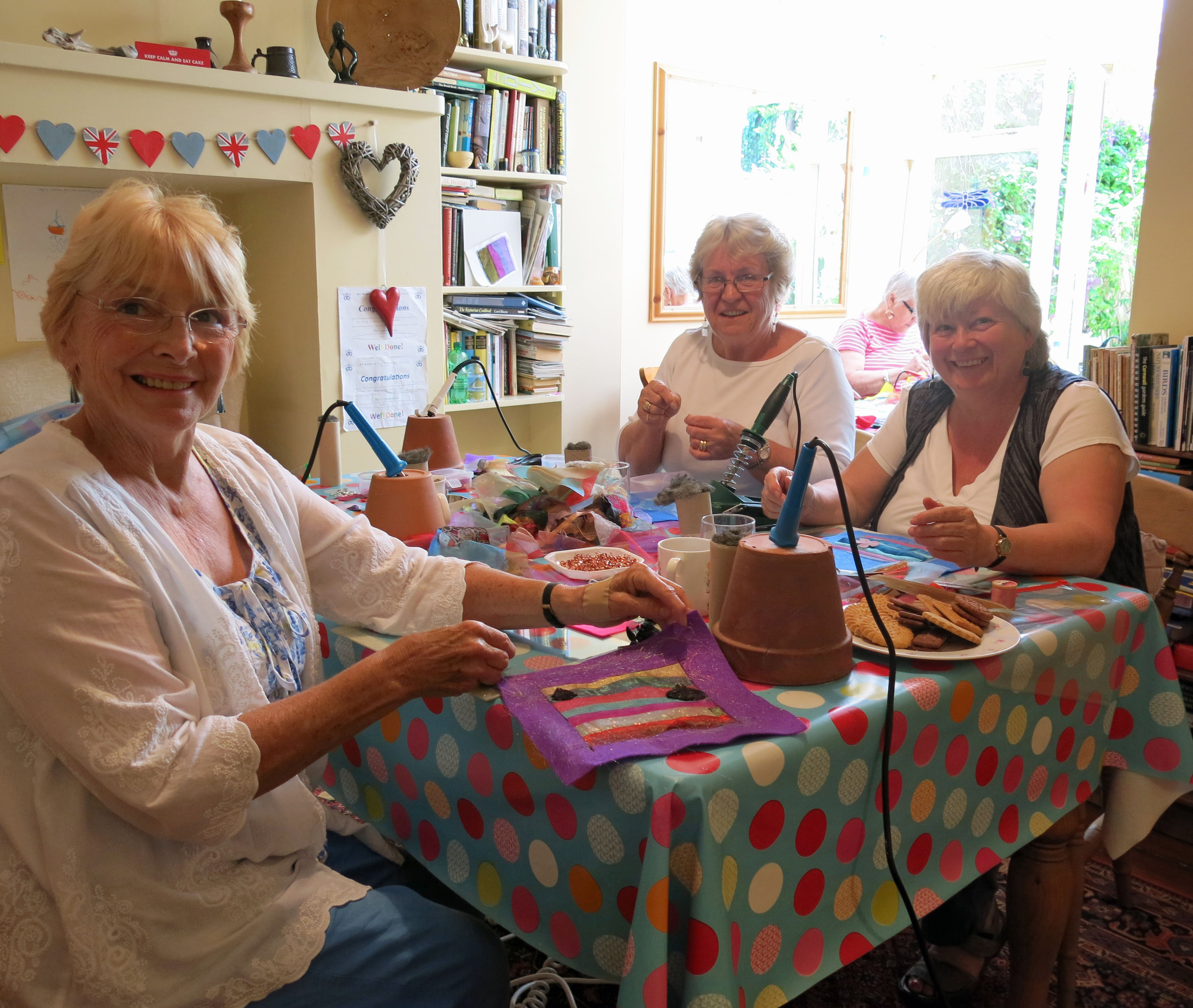


 Crowlas & Ludgvan WI